Rising pump prices fuel EV uptake
May 29, 2026
Oil price volatility has seen EVs become the unexpected ‘winner’, with more families across the UK making the switch to an EV than ever before.
In this insights post, we dive into the data and examine how conflict in the Middle East has led to a significant increase in EV sales.
Much like the way in which UK temperatures have suddenly skyrocketed in recent days, global oil markets have invariably acted as a barometer of geopolitical uncertainty. Today is, sadly, no different. From the oil shocks of the 1970s, to the Gulf tanker crises on the 1980s and ongoing and calcifying effects of Russia’s invasion of Ukraine in 2022, international conflicts have repeatedly damaged confidence in global energy markets and sent transport-related costs soaring.
Over the past few months, conflict with Iran, and particularly the continued disruption to maritime trade in the Strait of Hormuz, has reminded British motorists and businesses of this inherent economic Achilles heel. As drivers seek to limit their exposure to such global shocks, it’s no surprise that the UK EV market has been an unexpected ‘winner’ from this conflict and has gathered significant momentum.
What the data says
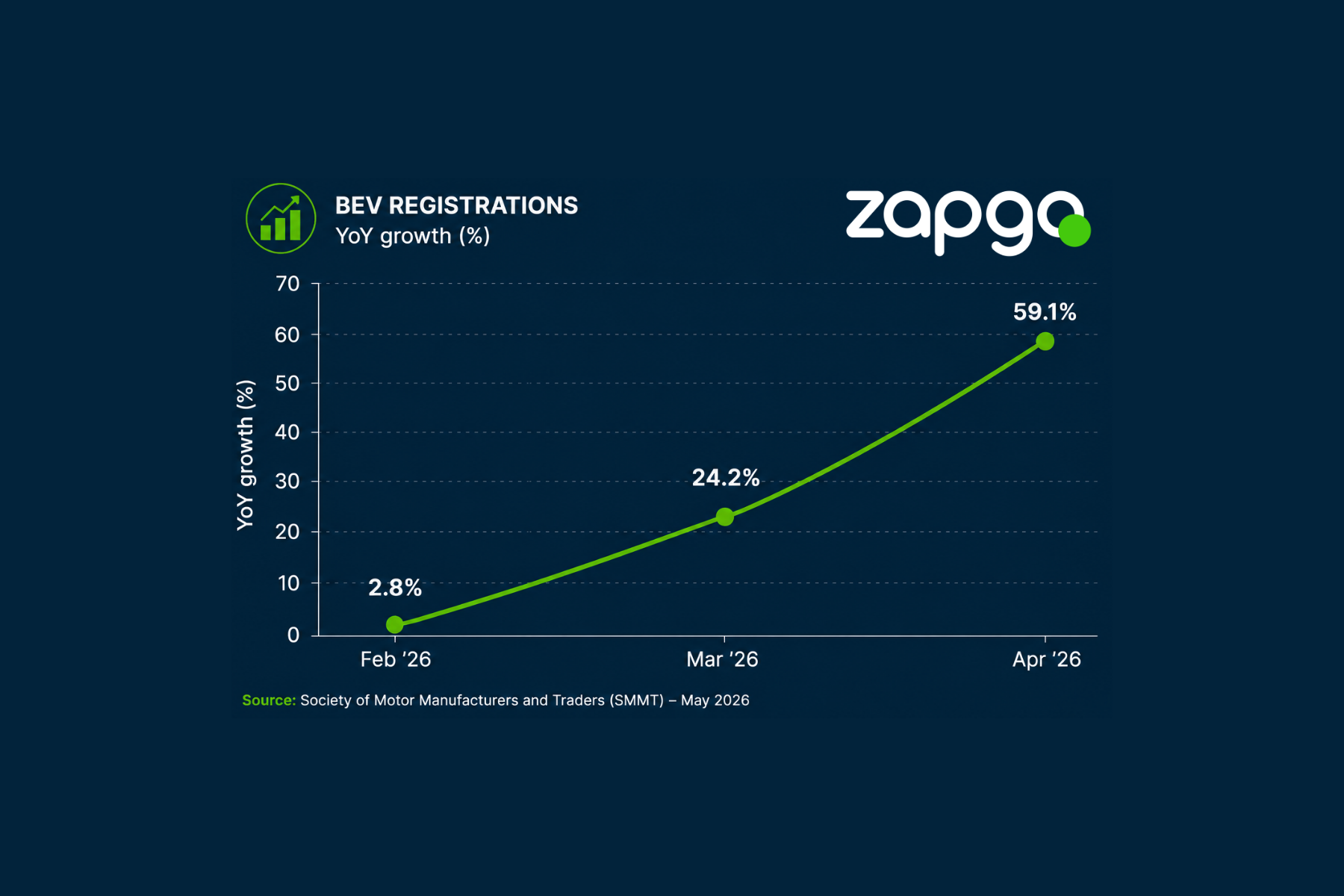
In February 2026, the Society of Motor Manufacturers and Traders (SMMT) reported that battery electric vehicle (BEV) registrations had risen by 2.8% year-on-year, with EV market share broadly remaining at around 22%.
By March, however, the picture had transformed itself: BEV registrations had surged by 24.2% year-on-year to a record 86,120 vehicles, as more consumers and businesses began to reconsider their long-term transport costs as part of an increasingly complex and tense cost of living equation and in the face of war clouds and ongoing fuel price volatility.
Momentum strengthened further in April: according to the latest SMMT figures, battery electric vehicle registrations rose by 59.1% year-on-year, with EVs accounting for 26.2% of all new car registrations during the month. Amid this torrent of positive signals, the UK passed another major milestone, recording its two millionth registered electric vehicle.
Analysing this data, the SMMT acknowledged that the Iran conflict has introduced additional uncertainty into the wider transport market, with rising fuel prices likely to increase interest in electric vehicles even as broader inflationary pressures continue to sustain economic headwinds and adversely affect consumers and their families.
The benefits of driving an EV
But one thing is unmistakably clear: for many drivers, the appeal of EV ownership is now largely practical rather than ideological. Lower running costs, reduced maintenance requirements and improving public charging availability are making EV ownership feel not just more savvy and accessible to growing numbers of UK households and commercially even more compelling to fleet operators who may in many cases have been among the earliest adopters.
As EV sales spin upward, the UK’s charging network also continues to scale rapidly. Indeed, the Department for Transport estimates that the UK now has many more public EV chargers than fuel pumps – yet another sign of the transformative speed of EV infrastructure growth and an accolade to consumer adoption, and something that would have seemed wildly improbably even a few years ago.
EVs deliver energy security
Recent market instability also points to another important factor in the conversation around EVs: energy security.
UK transport is electrifying at pace while domestic renewable energy generation also expands. Together, this means reliable EV charging infrastructure is increasingly becoming a key part of the UK’s wider energy resilience. This fact, on its own, does not instantly address the obstacles we’re overcoming in scaling infrastructure and improving grid connectivity, but it does demonstrate why rapid and reliable charging networks matter – not just to individual drivers but to the country as a whole.
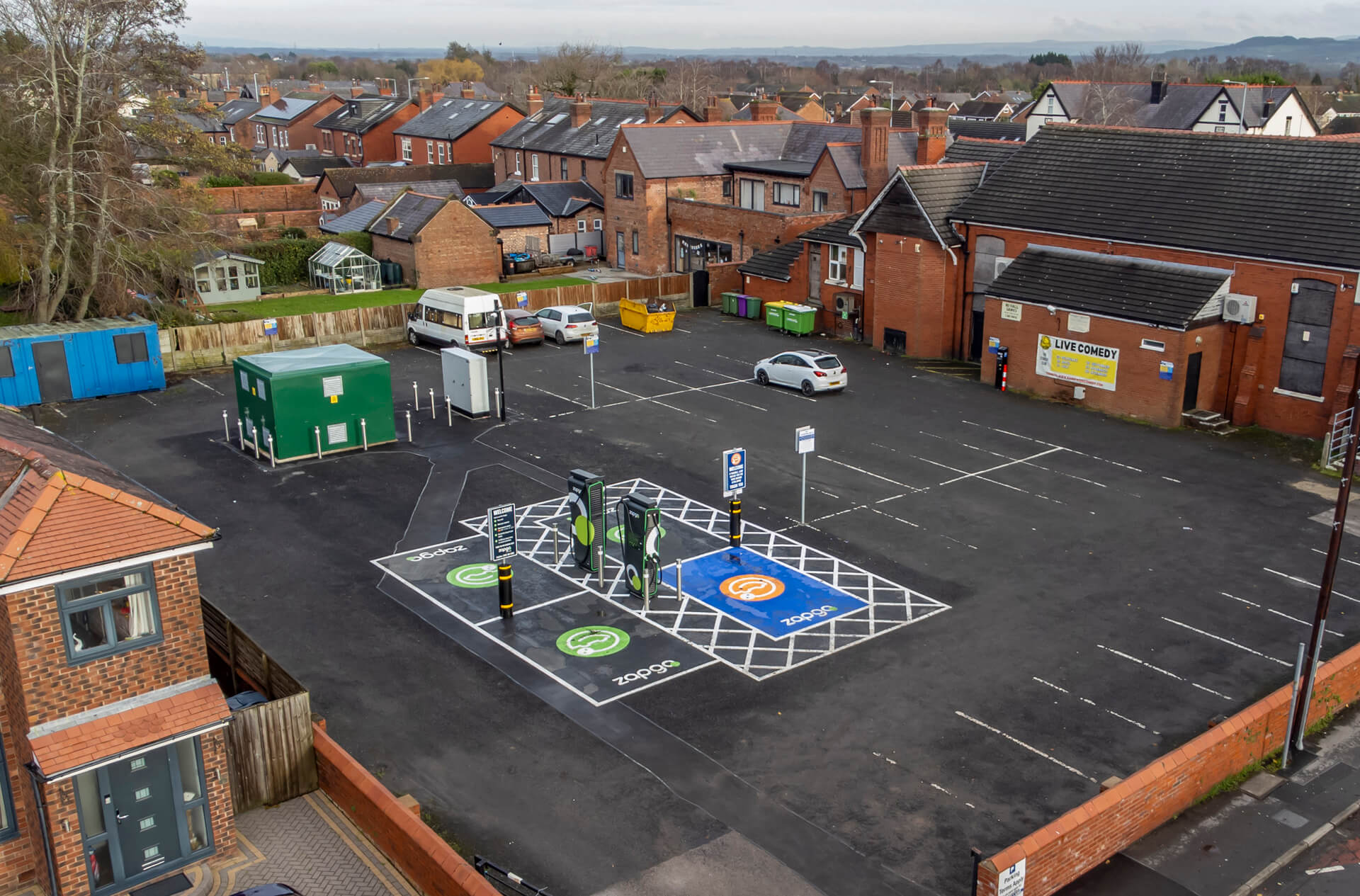
At Zapgo, we believe the future of EV infrastructure must be built around simplicity, reliability and convenience. The goal is not simply to install more chargers for the sake of it or to put flags on a map but, instead, to place charging infrastructure where drivers really need it: supporting local communities and businesses and helping them flourish.
Recent fuel price volatility may prove to be a temporary phenomenon. But the general direction of travel is clear. In managing their household finances and company budgets, consumers, families and businesses alike are demanding greater certainty, lower running costs and reduced exposure to global fuel market disruption. Over the last few months, that muted conversation has become a deafening roar.