10 EV charging myths debunked – Part 2
August 24, 2026
EV charging has become easier, faster and more widely available in recent years. But some outdated assumptions about how public charging works continue to shape inaccurate perceptions of today’s EV experience.
In the second of our two-part Zapgo Insights series, we examine five more common myths about public EV charging, from apps and hidden fees to accessibility and the perceived hassle of installing chargers for landlords.
In Part One of this series, we looked at some of the biggest misconceptions surrounding the scale and capability of the UK’s charging network. We examined whether there are enough chargers, whether the grid can cope with widespread EV adoption, how long charging really takes and why ultra-rapid charging is not confined to motorway service stations.
But finding a charger is only one part of the EV experience. Drivers also need charging to be straightforward, transparent and accessible, while landlords need infrastructure that makes practical and commercial sense.
Here are five more EV charging myths that deserve a closer look:
Myth six: Charging an EV is complicated for drivers
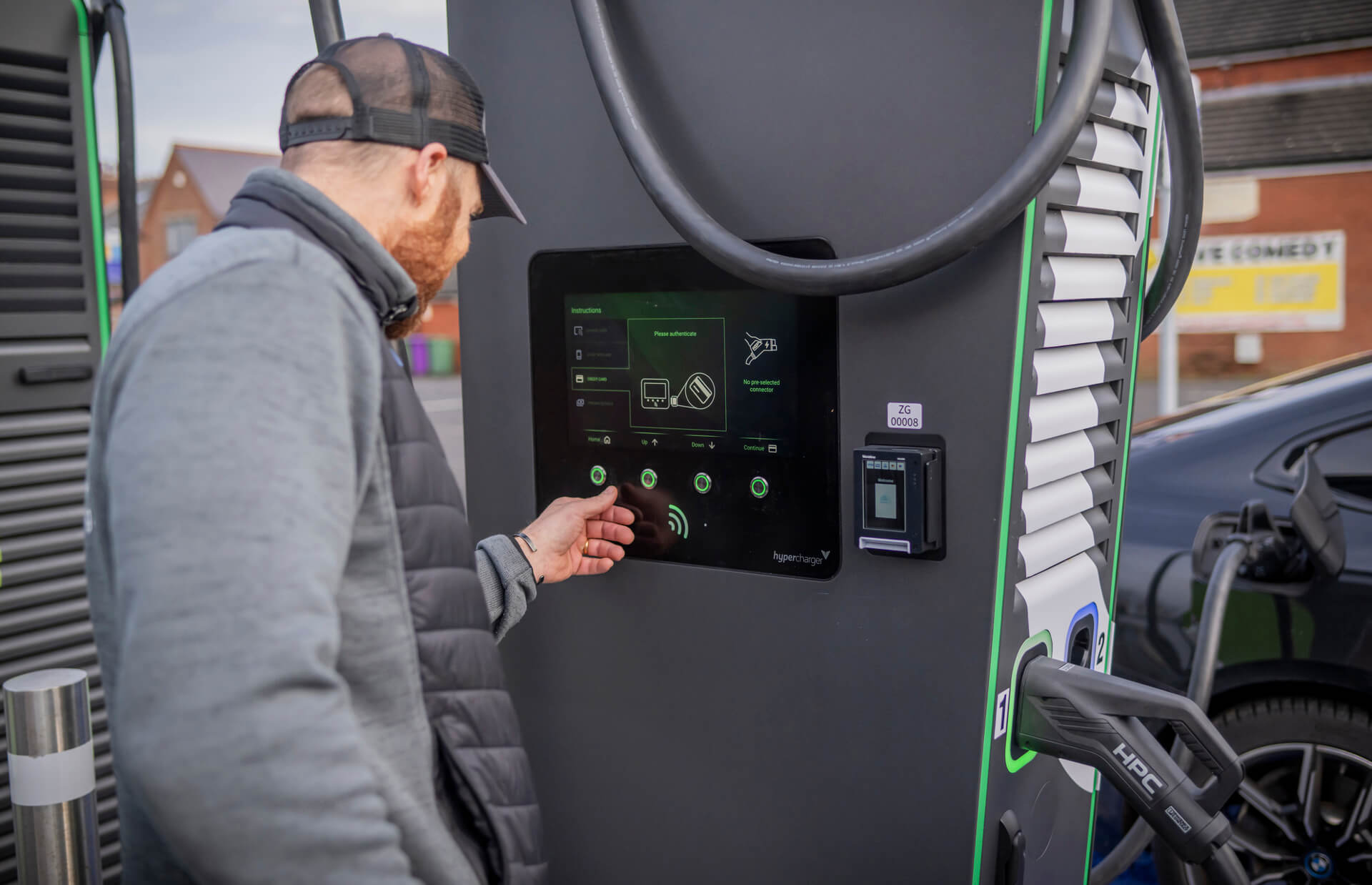
If you’ve never charged an EV before, it’s understandable that using a public charger may be a daunting prospect initially. When you actually do so, on a charger that is well designed and intuitive, however, you’ll quickly realise that the process is simple.
At a Zapgo charger, drivers can start a session on the charger screen or through the Zapgo app, select their connector and preferred payment method, plug in and then simply follow the on-screen instructions when they are ready to leave. For most drivers, they’ll find this is, in fact, even easier than the process for refuelling a vehicle at the petrol pump.
A good charging experience should not require technical knowledge or a lengthy set of instructions. It should be intuitive enough that drivers can arrive at an unfamiliar site and understand what to do almost immediately. Complexity is not inevitable when it comes to EV charging, and that is why our charging sites are designed to be simple, easy and reliable to use every single time you come to charge up your vehicle.
Myth seven: You need a different app or membership for every charging network
It’s no secret that there are many EV charging apps available to drivers. This level of choice does not, however, mean that drivers need to download a new one every time they use a different charging network.
Charging apps can be useful: they can help drivers locate chargers, enable them to monitor a session while they get on with their day, and sometimes allow them to access additional features. In Zapgo’s case, however, they are an option rather than a barrier standing between a driver and a charge.
At all our sites, drivers can pay directly using major contactless debit and credit cards, Apple Pay, Google Pay and RFID cards, as well as through the Zapgo app. Our chargers are also accessible through third-party aggregator services, giving drivers even greater choice over how they access the network.
The principle is straightforward: drivers should be able to choose the method that works for them. The more straightforward public charging becomes, the easier it will be for drivers to treat charging as an ordinary part of their journey.
Myth eight: Public charging involves hidden prices and surprise fees
The sector is not guilt free when it comes to this myth. When charging with certain operators, public charging pricing can sometimes be difficult to understand: different tariffs, membership rates, connection fees and payment structures have all contributed to confusion among drivers.
That lack of transparency is a problem. Drivers should know what they are going to pay before they begin charging, rather than having to work it out after the session has ended.
But confusing pricing is not an inevitable part of public charging.
At Zapgo, our approach is deliberately simple. Drivers pay a clear price per kWh, with no connection fees, no compulsory memberships and no hidden costs. That may just sound like common sense, but simplicity matters. Drivers already have enough to think about when planning a journey without having to decode a charging tariff as well. Public charging has historically sometimes been more complicated than it needs to be – the solution is not to accept that complexity as normal but, instead, to remove it just as we’ve done here at Zapgo.
Myth nine: All public chargers are automatically accessible
A newly installed charger does not, currently, automatically have to be an accessible charger. Accessibility involves far more than just having the newest charger – it’s about the entire wider charging environment.
That includes the size and layout of the bay, whether there is step-free access, the height of the screen and payment terminal, the weight and positioning of the charging cable, lighting, signage and the amount of space available around the vehicle. These details must all be correct if a charger is genuinely going to be usable for disabled drivers and passengers.
At Zapgo, we believe that accessibility needs to be considered from the beginning of the site design process rather than treated as an afterthought. A genuinely good charging network must work for as many drivers as possible.
Myth ten: Installing EV chargers is expensive for landlords
For many landlords, the idea of installing rapid EV charging might sound daunting. They may be concerned about questions around planning, grid connections, construction, hardware, maintenance, customer support and the cost of the installation itself. If a business with no experience of EV charging had to manage all of that alone, it could understandably feel like a major operational burden.
But that’s not how it works with Zapgo chargers. Zapgo fully funds the installation of our chargers at suitable partner locations and manages the process from planning and construction through to operation, monitoring and maintenance. Our partners also receive a share of the revenue generated from every charge.
That means a car park can become a revenue-generating asset without the landlord having to become an EV charging expert. On top of this revenue share, installing chargers also helps your business attract new visitors, encourage customers to spend longer at your destination and prepare to meet the demands of the growing number of EVs on UK roads.
Installing charging infrastructure at your business does involve considerable work. But with the right partner, that work sits with the operator rather than the landlord.
Perceptions are finally catching up to reality
Many of the myths surrounding EV charging originated from a time 10 years ago when EVs were a brand new challenger technology and, accordingly, public charging was harder to find, making payment at a charger was more complicated, and drivers were less sure about what they expected to get out of a charging experience.
While public perceptions of EV charging have evolved since then, that does not mean the job is finished. The industry is continuing to do more to improve accessibility, simplify the charging experience further, and expand provision in underserved areas. But these are all practical challenges to solve, not unfixable reasons to assume that EV charging isn’t right for you.
At Zapgo, we believe public charging should be simple, reliable and convenient for drivers, while delivering practical value for the businesses and communities that host it.