Businesses are leading the switch to electric vehicles
October 5, 2026
When you think about the growing number of EVs on Britain’s roads, most people picture individual motorists deciding whether to make the switch. In reality, however, a significant number of the journeys conducted across the country, and a large driver of the electrification of our vehicles is, in fact, businesses.
Company cars, commercial fleets and business vehicles represent a major part of EV adoption and those drivers have particular charging requirements. In this Zapgo Insights article, we look at why fleets are helping drive the transition to electric vehicles and what the UK’s public charging network needs to offer them.
It would be wrong to suggest that the EV transition isn’t being driven by millions of individual purchasing decisions. Perhaps the largest force behind the switch is, however, business.
Last year, 78% of new EVs registered in the UK were company cars: a higher proportion than for plug-in hybrids, diesel or petrol vehicles. This simple statistic has an enormous bearing on how we think about and build charging infrastructure.
Businesses are changing the UK car market
Fleets have always played an important role in the UK automotive market. In July 2026 alone, fleets accounted for nearly 60% of all new car registrateions in the UK. And there’s a good reason why businesses have proven particularly well-placed to adopt electric vehicles.
For many businesses, company vehicles are selected according to relatively clear commercial rules: whole-life cost, reliability, tax, and whether they can reliably perform the job they’re being purchased for.
Clearly, when the economics and operational requirements make sense, as they do with EVs, businesses are well-placed to move quickly.
For a fleet, charging is an operational necessity
For a business running hundreds of vehicles, however, unreliable charging presents a potentially catastrophic operational problem.
When you see a business vehicle on the road, it’s usually there for a reason: it may be carrying an employee to appointments, delivering goods, servicing customers, or travelling between business locations.
Time spent unnecessarily searching for a charger which works and offers the right speed is therefore more than just inconvenient: it can also mean lost productive time and lost revenue for the business. And this makes charger reliability and charger speeds two of the most important factors for businesses.

Businesses operate across the whole country
Charger reliability and speed are not, however, the only factors that matter to businesses. The location of chargers is also of vital importance.
Few businesses with fleets operate exclusively around major urban charging hubs: salespeople visit customers in market towns; engineers travel into rural communities to carry out works; delivery drivers cross countless regions with their parcels; and employees go to sites, shops, offices and industrial estates throughout the country. This means that fleet electrification is dependent on charging infrastructure being available where business takes people.
Once a fleet operator has located a charger, they also need to be able to pay for sessions and manage expenditure across a multitude of drivers and vehicles.
Rather than expecting drivers to create a new account or navigate unfamiliar and time-consuming payment and expense processes each time their work takes them to a different charging provider, businesses are using charging aggregators to access multiple charging networks through one familiar platform.
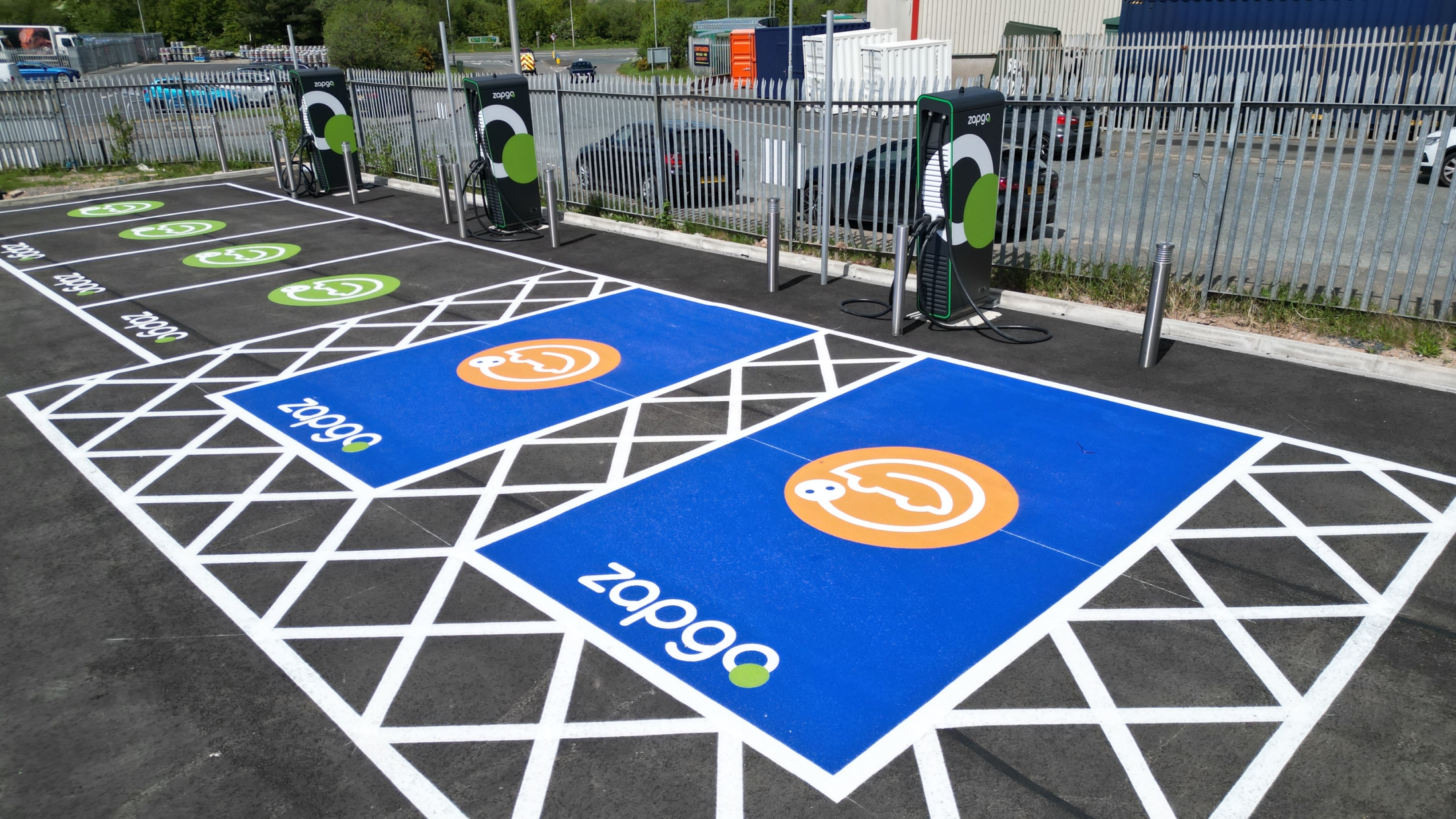
Zapgo’s growing network of public EV chargepoints is focused on destination locations and communities where rapid charging has historically been limited. Through our partnerships with fleet charging platforms Paua and Allstar, we’ve also opened up our platform to businesses, helping them locate chargers and manage payment easily wherever their work takes them.
Keeping Britain’s businesses moving
The adoption of EVs by British businesses is likely to stay, and the requirements these unique users have provides a useful test of the charging industry. If a business finds its fleet is able to locate reliable charging infrastructure in the right locations and add significant range quickly so they can get on with their day of work, then the charge point operator may just have won a customer for life.
We’re grateful to businesses for leading the charge in putting electric vehicles on the road. The task now for our industry is to create a network which ensures those businesses stay there.
“Businesses are helping lead the switch to electric vehicles. Charging infrastructure now needs to keep pace.”