Long read: Why accessibility matters
March 21, 2024
By 2035, there will be an estimated 2.7 million disabled drivers and passengers in the UK, according to the Motability Foundation. That means it is now more important than ever before that we and the rest of the charge point operator community (CPOs) ensure EV charging is fully accessible to all. At Zapgo, the issue of charge point accessibility is central to our mission – ensuring everyone can benefit from a greener and more inclusive future.

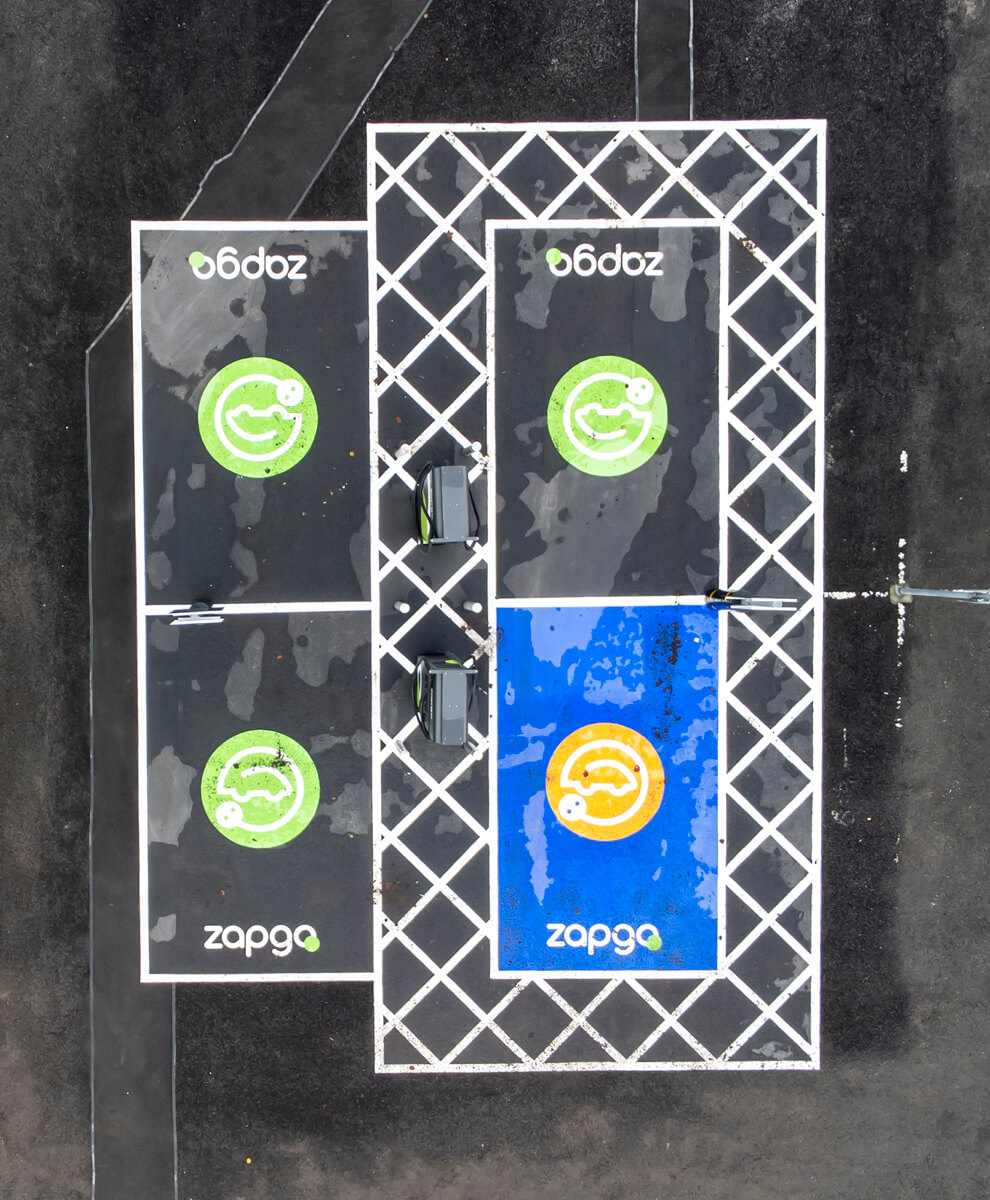
Accessibility in the EV charging sector is a broad issue covering a multitude of related matters. On the one hand, accessibility means giving appropriate thought to the physical aspects of a site, such as step-free access, height of cable placement and charger cable weight. But accessibility also means ensuring that charging stations are simple to find, clearly signposted, and quick and easy to use for any EV driver, irrespective of their personal circumstances.
Often overlooked and not widely understood outside the EV sector, in 2022 the British Standards Institution (BSI), in partnership with the Office for Zero Emission Vehicles and Motability, launched PAS 1899:2022. This landmark standard provides guidelines for accessible EV charging, outlining key requirements and recommendations for creating accessible public EV charging infrastructure.
PAS1899:2022 is undoubtedly a massive step forward in delivering the EV revolution. But what more can the transport sector do?
One major impediment to these recommendations is that compliance with them is not mandatory. This means that EV charge point operators are under no legal obligation to follow these recommendations, and this means that many drivers in the UK may have limited access to accessible charging options.
While organisations have attempted to tackle these challenges, they have often encountered multiple barriers to overcoming the challenges encountered. A survey carried out by Zapmap revealed that a third of disabled people recalled having difficulty locating a charger that was suitable for their access requirements, with one in seven having also struggled with the weight of the charging cables. Since then, Zapmap have introduced a filter for locating charge points which have “no physical restrictions”, with the intention of helping app users who might otherwise find themselves experiencing real difficulties accessing charging services. Nevertheless, the criteria for accessibility standards used by the filter remains unclear.
Legislation to implement PAS 1899:2022 as a legal requirement for all public charging stations could transform the landscape of accessible EV charging across the UK. Meanwhile, companies like Zapgo, which are committed to making EV charging inclusive, play a crucial role in bridging the gap in the provision of accessible EV charging.
At Zapgo, we’re determined to ensure that every user will be able to come to our charging stations points in the certain knowledge they will be able to use them with confidence and ease.
In the New Year, we will be holding a roundtable event to hear from some of the leading community champions who are committed to improving accessibility across the transport sector. We believe having these inclusive conversations can play a vital role in helping make Zapgo as accessible as possible, ensuring that everyone’s perspectives are well represented and every user is treated with respect and understanding when they visit our sites and are equally well placed to use our chargers, irrespective of their accessibility requirements.
If you’d like to speak to the Zapgo team about becoming a partner and joining our network, please email us at charging@zapgo.co.uk. We’d be delighted to work with you to deliver a fully funded solution of high speed EV chargers to enhance your site and its appeal to the growing network of EV drivers around the UK.
Sources:
- ‘Response to the Environment and Climate Change Committee consultation on Electric Vehicles’, Motability Foundation, Link
- ‘BSI Kitemark™ for accessible electric vehicle charging (PAS 1899)’, BSI Group, (2024) BSI Kitemark™ for accessible electric vehicle charging (PAS 1899)
- ‘Electric Vehicle Charge Points ‘Lack Accessibility’’, Zapmap, (12/2020) Electric Vehicle Charge Points ‘Lack Accessibility’